Natural Red Algae Extract Offers Sustainable Solution for Crop-Damaging Nematode Control
Invented by LEBBAR; Mohammed Rachid, LEBBAR; Mohamed Salim
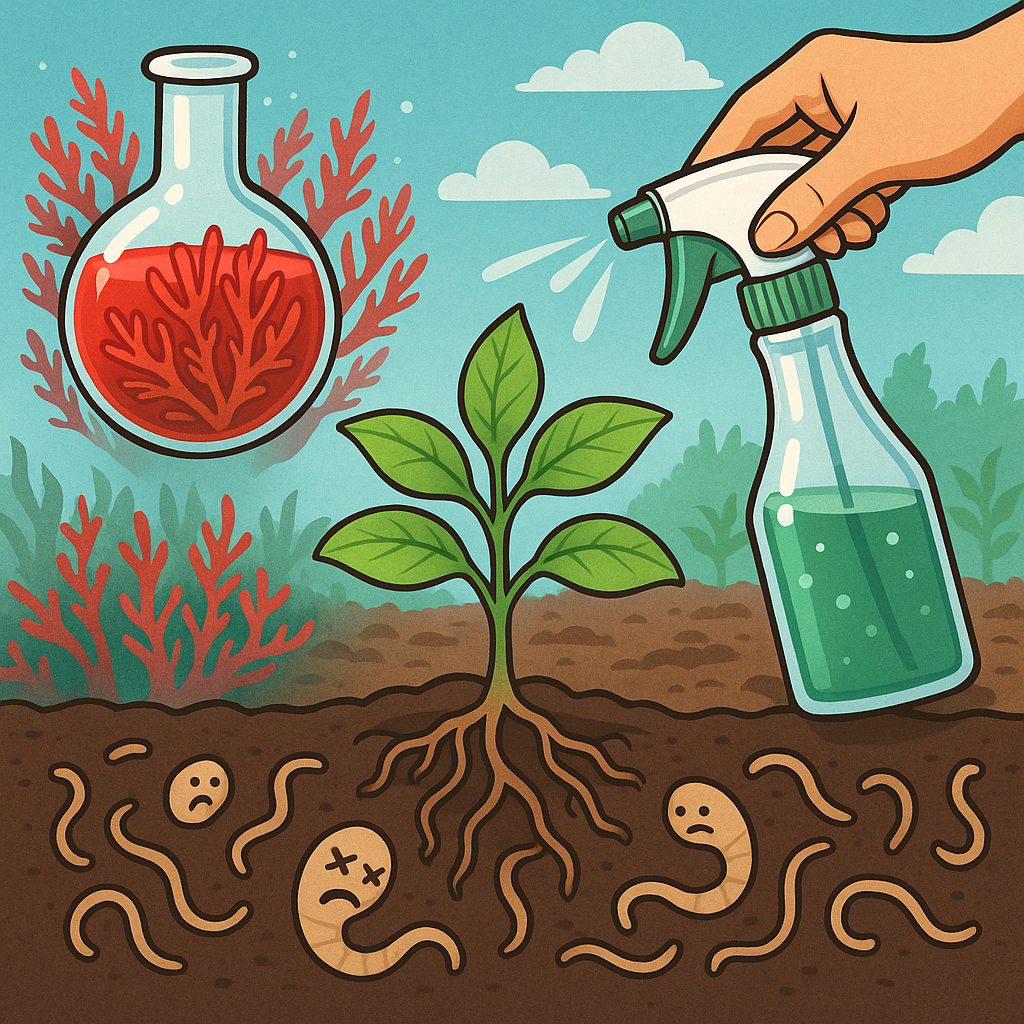
Farmers have long battled tiny worms called nematodes that attack plant roots and ruin crops. A recent patent suggests a new, natural way to fight these pests using a liquid product made from red algae. Let’s explore what this means for farmers, gardeners, and anyone who cares about healthy plants.
Background and Market Context
Nematodes are small worms that live in the soil and attack plant roots. You cannot see them with your eyes because they are very tiny. Even though they are small, nematodes can do a lot of damage. They cause plants to become weak, make fewer fruits and vegetables, and sometimes even die. Most farmers have to deal with nematodes at some point. When nematodes attack, the plant roots get bumps called “galls,” become twisted, and stop working well. This makes it hard for the plant to get water and food from the soil.
For a long time, farmers used chemical treatments to kill nematodes. These chemicals worked well, but over the years, many of these products have been banned. The main reason is that these chemicals can be bad for people, animals, and the environment. They can get into water, hurt helpful insects, and even affect the food we eat. As a result, farmers are looking for safer, more natural ways to protect their plants.
Some farmers try to grow plants that nematodes do not like or switch crops every season. Others use helpful bugs that eat nematodes. These methods can help, but they are not always enough, especially for certain types of nematodes that can eat many kinds of plants. Because of this, there is a big need for new, safe ways to control nematodes that do not harm people, animals, or the earth.
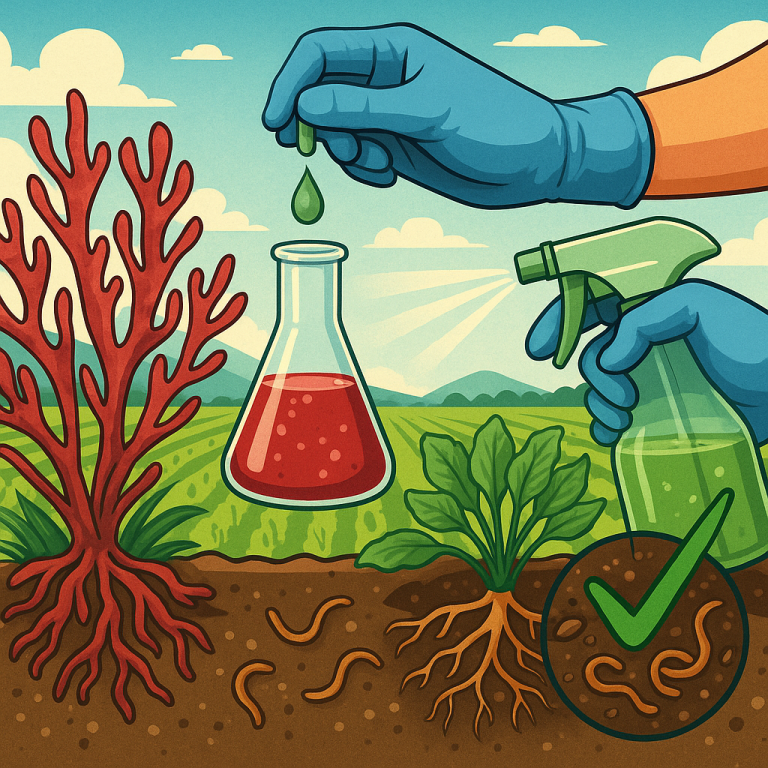
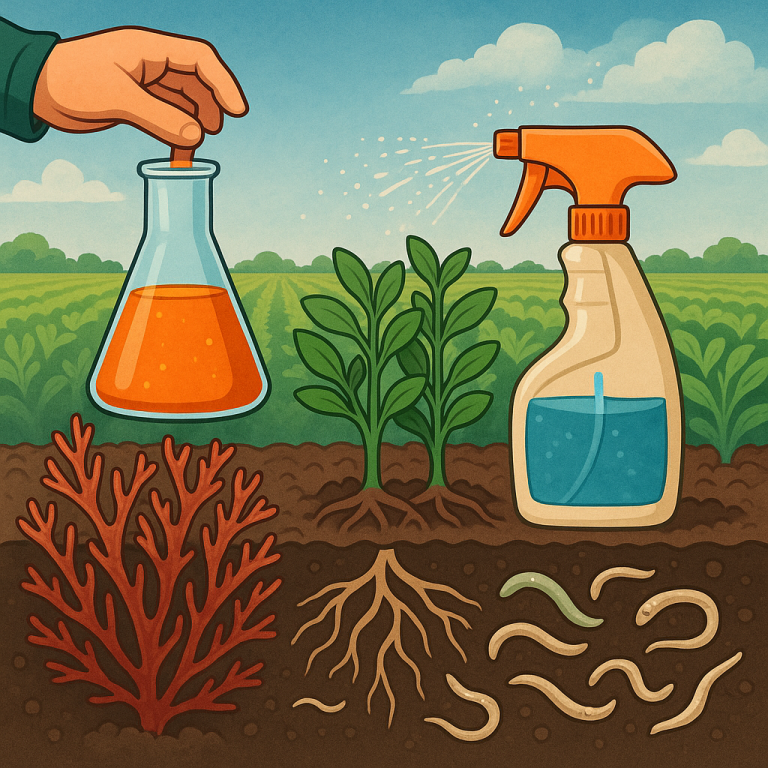
This is where the new idea comes in. The patent describes using a liquid made from red algae (a kind of seaweed) to protect plants from nematodes. Red algae are common in the ocean and have been used for other things, like food or making jelly. But now, researchers have found a way to use red algae as a natural nematode fighter. If this method works well, it could help farmers grow healthier crops without using dangerous chemicals.
Scientific Rationale and Prior Art
To understand why red algae might help, we first need to learn a little about nematodes and how people have tried to stop them in the past. Nematodes are not like earthworms; they are their own group of worms. When nematodes attack a plant, they use a sharp part called a stylet to poke into the root. Then, they inject chemicals that help them eat the plant from the inside. The plant gets hurt and starts to look sick. Some common signs are root galls, stunted growth, and wilting, even if there is enough water.
Over the years, people have tried many ways to get rid of nematodes. The three main approaches are:
- Biological control: using natural enemies of nematodes, like certain bugs or fungi.
- Cultural control: changing farming methods, like rotating crops or planting varieties that nematodes do not like.
- Chemical control: using special chemicals (nematicides) to kill nematodes in the soil.
Chemical control used to be the most popular because it was fast and worked on many types of nematodes. But these chemicals can be very harmful. They may poison water, hurt animals, and make food unsafe. Because of these problems, many countries have stopped farmers from using them.
Other methods, like using helpful bugs or rotating crops, are good but not always strong enough. Some nematodes can attack many types of plants, so rotating does not always work. Biological approaches are safe but may take a long time and may not work everywhere.
Scientists have also looked at plant extracts and natural products to fight nematodes. Some plants have chemicals that can hurt or kill nematodes. For example, marigold plants can stop nematodes from growing. There have been studies using extracts from garlic, neem, and other plants, but results are mixed, and none has become widely used for large farms.
Red algae, especially those from the Gelidiaceae family, are known for making agar, which is used in food and science labs. Some studies have shown that seaweeds have chemicals that can stop plant diseases or pests. But until now, there was no clear way to use red algae extracts, especially from certain species, to fight nematodes in a safe, simple, and effective way. This is where the invention described in the patent stands out.
Invention Description and Key Innovations
The patent describes a new method for protecting plants from nematodes using a liquid product made from red algae. The special part is how this liquid is made and how it is used.
The process starts by collecting red algae, especially from the Gelidiaceae family. Some examples include Gelidiella acerosa, Gelidium amansii, and Gelidium sesquipedale. These seaweeds are found in the ocean, sometimes near the Moroccan coast. The algae are mixed with water and a small amount of a safe, common chemical called sodium hydroxide or potassium hydroxide. This mixture is kept at room temperature and stirred for several hours. The process pulls out special chemicals from the algae into the water.
After the extraction, the mixture is filtered so only the liquid part is kept. This liquid contains the helpful chemicals from the red algae. Sometimes, the liquid is made even stronger by concentrating it, drying it, or freezing it and then dissolving it in water when it is time to use it.
Before using the liquid on plants, it is often neutralized—this means the pH (how acidic or basic it is) is adjusted so it is safe for plants. This can be done by adding a little acid, such as sulfuric acid, nitric acid, or phosphoric acid, until the pH is close to neutral.
The final product is a water-based liquid that can be watered onto plants or soil. It can be used on many types of plants, including vegetables like tomatoes and lettuce, fruits like bananas or apples, flowers, and even field crops. The liquid is safe to use and does not harm the environment or people.
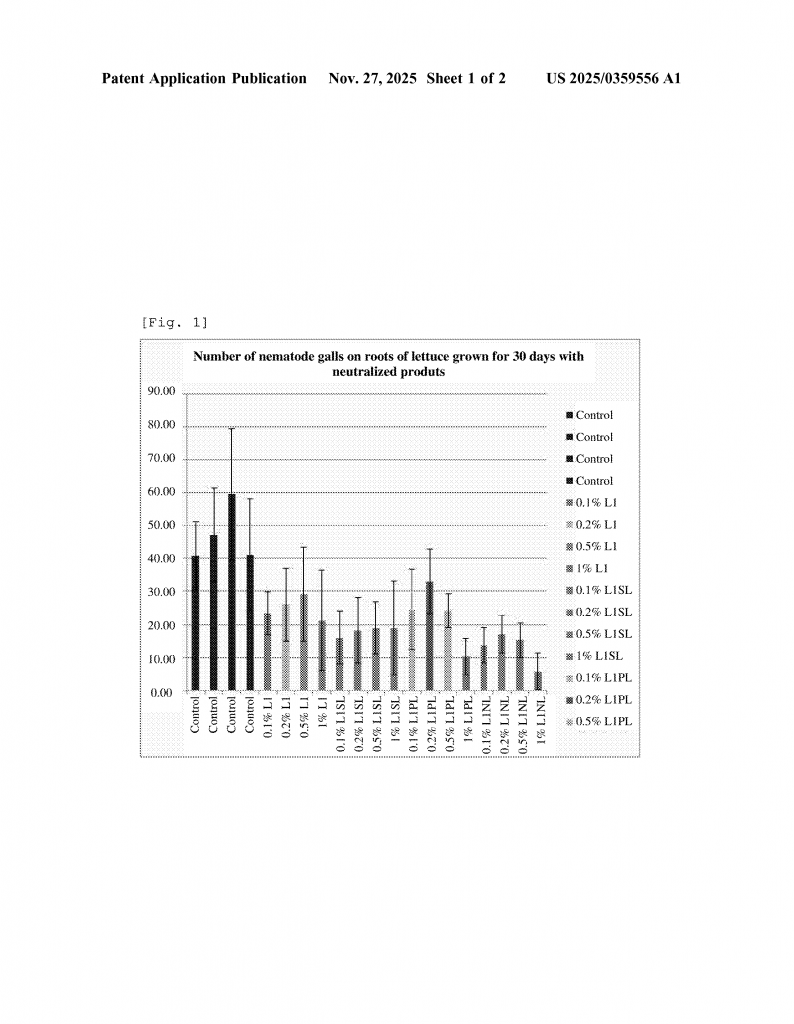
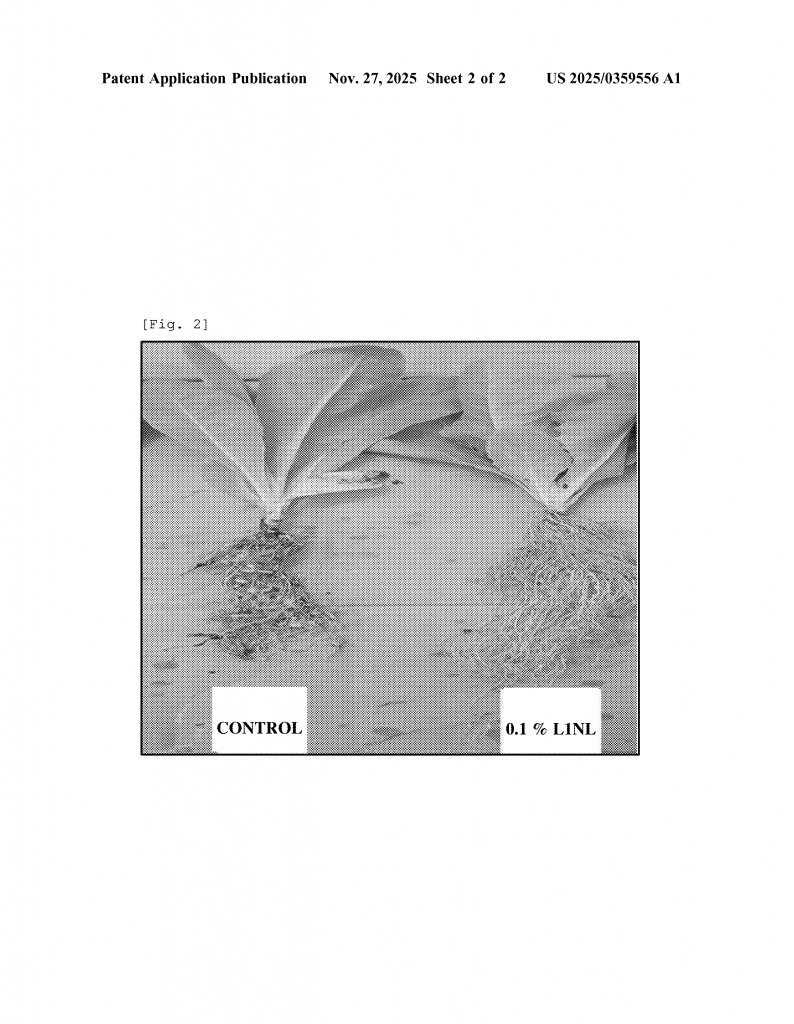
In the tests described in the patent, the liquid was watered onto the soil or directly onto the plants once a week for several weeks. After about a month, the plants treated with the algae liquid had fewer nematode galls on their roots compared to plants that did not get the treatment. The roots looked healthier, and the black spots caused by nematodes were gone in treated plants.
The amount of liquid used can be adjusted. The patent says you can use as little as 0.5 milliliters up to 100 milliliters per 1000 liters of water, or apply between 1 and 10 liters per hectare of land. The liquid can be applied once or up to seven times a week, and this can continue for up to 40 weeks, depending on the need.
This is a big step forward because:
- The method is simple and uses natural materials.
- It gives farmers a safe way to protect crops without chemicals that harm people or nature.
- It can be used on many types of crops.
- The product is easy to make using common equipment.
- The treatment can be adjusted for different farm sizes and needs.
The most important innovation is the use of a specific extract from red algae, made in a certain way, to fight off nematodes. It is not just using seaweed, but using a carefully prepared liquid from certain types of seaweed, extracted with mild chemicals, filtered, and neutralized to make a safe product for plants and soil.
The research also shows that this method works in real-life tests, not just in theory. Plants treated with the algae extract were stronger, healthier, and had fewer signs of nematode damage. This means farmers and gardeners could use this product to grow better crops and have less loss from nematodes, all while keeping the environment safe.
Conclusion
The patent brings a fresh approach to fighting plant-parasitic nematodes. By using a liquid extract from red algae, made in a simple and safe way, farmers and gardeners can protect many types of plants without relying on harmful chemicals. This solution is natural, effective, and environmentally friendly. If it is adopted widely, it could help people grow healthier food, reduce crop losses, and make farming safer for everyone. The method is easy to use, fits into normal farming routines, and offers hope for a cleaner, greener future in agriculture.
Click here https://ppubs.uspto.gov/pubwebapp/ and search 20250359556.