Adaptive AI System Optimizes Neural Networks in Real Time for Efficient, Scalable Enterprise Performance
Invented by Galvin; Brian
Artificial intelligence is evolving fast. But as neural networks get bigger and more complex, there is a growing need to make them smarter, more efficient, and adaptable to new challenges. A recent patent application introduces a new computer system that promises to do just that. This unique invention combines advanced neural network architecture, multi-level supervision, smart pruning, and dynamic communication pathways. In this article, we’ll break down what this means, why it matters, and how it could shape the future of AI.
Background and Market Context
Neural networks are the backbone of today’s AI revolution. They power voice assistants, image recognition, text generators, and much more. These networks work by connecting thousands or even millions of small processing units called neurons, organized in layers. Each neuron processes a small piece of information and passes it along, allowing the network to solve complex problems.
But as neural networks get deeper and wider, they run into problems. Big models need a lot of computer power and memory. Training them is expensive, and running them can burn through energy and resources. Companies and researchers are always looking for ways to make these models faster, lighter, and smarter. One way to do this is by pruning—removing parts of the network that aren’t pulling their weight. But pruning is tricky. If you cut too much, the network breaks. If you cut too little, you don’t save much.
Another challenge is flexibility. Most networks are built for one job. Rebuilding or retraining them for a new task is slow and costly. Ideally, we want neural networks that can adapt on the fly, learning as they go and changing their structure to meet new demands.
The market is hungry for solutions. Cloud providers want to save on power. Phone makers want AI that runs fast and cool on small devices. Researchers want tools that can learn from new types of data—text, images, audio, and beyond—without starting from scratch each time. The pressure is on to invent AI systems that are both powerful and efficient, and that can keep up with the pace of change.
The patent application we’re exploring introduces a system designed to address these needs. It’s not just another neural network. Instead, it’s a complete framework for making neural networks more efficient, more adaptive, and more resilient. It introduces a layered approach to supervision, dynamic pruning, and smart communication pathways, all working together to deliver smarter AI.
Scientific Rationale and Prior Art
To understand what’s new here, let’s first look at how current neural networks are built and managed.
Most modern neural networks are inspired by the way the human brain works. They have layers of neurons connected in patterns, processing data step by step. In popular models like Transformers (used for language, vision, and more), information moves through layers, with each layer learning different features.
But traditional networks have limits:
- They treat all neurons and connections almost equally, even if some parts are barely used.
- Pruning is usually done after training, not during live operation. This means networks can’t adapt quickly to new data or tasks.
- Supervision is often global (over the whole network) or local (on small parts), but rarely both. There isn’t much coordination between different levels of the network.
- Communication between distant parts of the network is slow or awkward. Most signals travel step-by-step through layers, which can limit flexibility.
There are some existing approaches to fix these problems. For example, researchers have tried pruning networks based on activity, using “attention” to focus on important features, or adding skip connections to speed up information flow. But these solutions are often one-size-fits-all and don’t adapt in real time.
What’s missing is a way to combine real-time supervision, dynamic pruning, and flexible communication—all in one system. The new invention aims to fill this gap by introducing several key innovations:
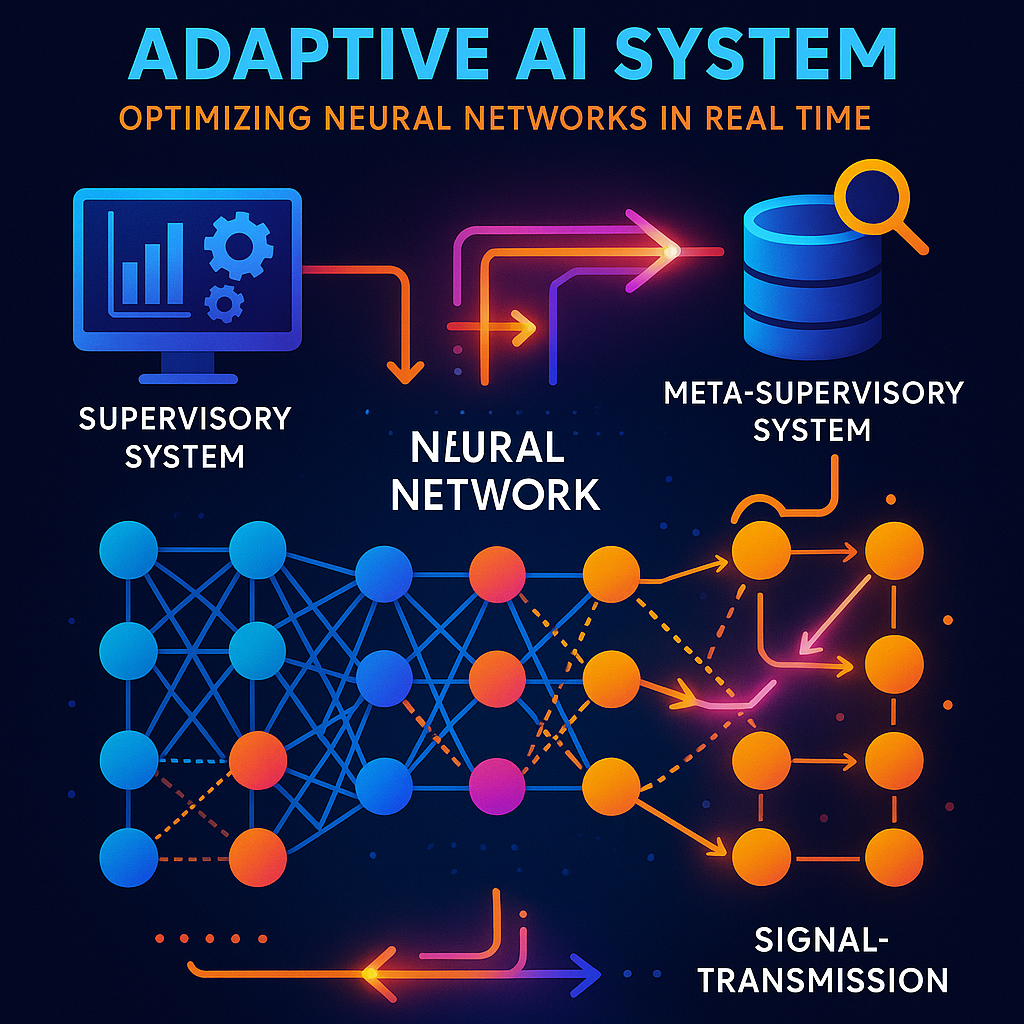
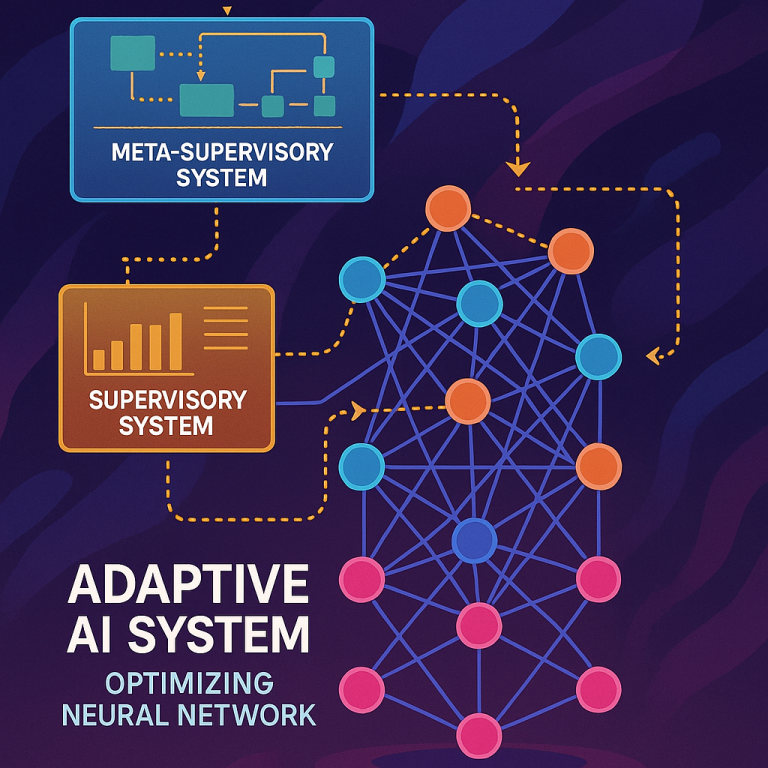
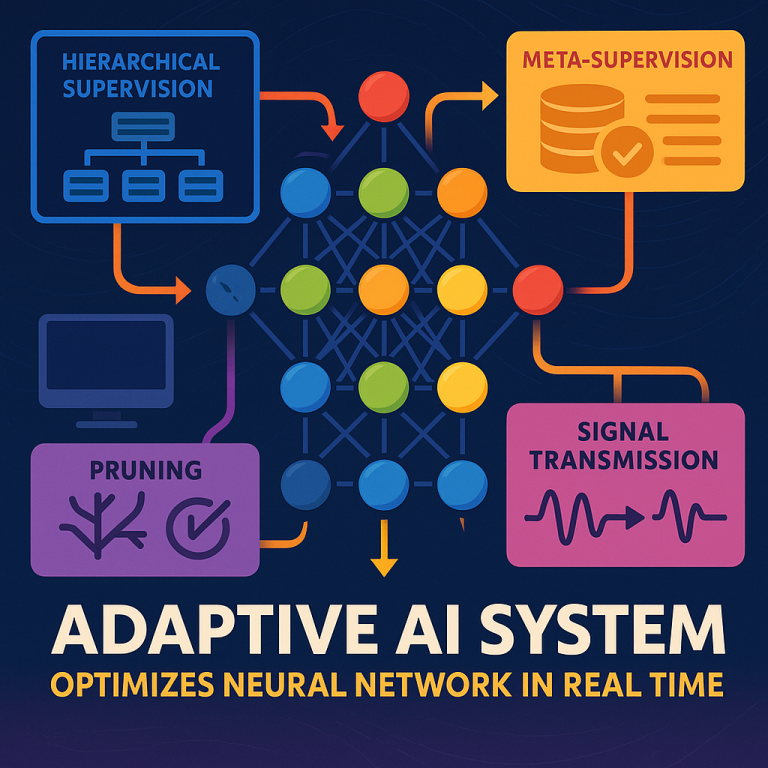
- Hierarchical Supervision: Multiple levels of control monitor the network, from close-up (local) to big-picture (global). These supervisors collect data, spot patterns, and make decisions about how to adapt the network.
- Meta-Supervision: A higher-level system watches the supervisors themselves, learning which strategies work best and storing successful adaptation patterns for future use.
- Dynamic Pruning: The system can identify and remove underused neurons or connections in real time, based on current activity and network needs, not just after training.
- Smart Communication Pathways: The network can set up direct links between distant regions, allowing information to flow quickly where it’s needed most. These pathways can be tuned for strength and timing based on how effective they are.
By combining these tools, the system can not only make the network leaner and faster, but also help it learn and adapt as it operates. It’s like giving the network its own brain and nervous system for self-improvement.
In summary, while earlier work has explored supervision, pruning, and communication in isolation, this invention brings them together in a coordinated, multi-level system. That’s what sets it apart from prior art and makes it so promising for the next wave of AI applications.
Invention Description and Key Innovations
Let’s break down the main features of the invention and see how they work together.
1. Hierarchical Supervisory System

At the heart of the invention is a supervisory system made up of several layers. Each layer has its own job:
- Lower levels watch small groups of neurons closely, collecting data about how active they are, what patterns they follow, and if they are working well.
- Mid-level supervisors look at bigger chunks of the network, finding patterns and bottlenecks where information might be getting stuck.
- Higher-level supervisors oversee the whole network, making strategic decisions about where to grow, prune, or reroute signals.
These supervisors talk to each other, sharing information about what’s happening in their parts of the network. This way, changes made in one area can fit into the bigger picture, keeping the network balanced and efficient.
2. Meta-Supervisory System
Above the supervisors sits a “meta-supervisor.” This is like the coach for the coaches. It watches how supervisors behave, tracks which changes succeed or fail, and builds a memory of what works best. Over time, it learns general rules for when to prune, when to grow, and how to keep the network stable.
This meta-level learning means the system can get better at adapting, not just reacting to the current situation but anticipating problems and applying successful strategies from the past. The meta-supervisor can also tag successful changes with context—so it knows, for example, that one pruning pattern worked well for language tasks but not for image tasks.
3. Dynamic Pruning and Architectural Changes
The system doesn’t wait until the end of training to prune the network. Instead, it prunes “on the fly,” during live operation. Here’s how:
- Supervisors use adaptive thresholds to spot neurons or connections that are used less than others.
- When sparsity is detected (not enough activity), the system marks those parts as candidates for pruning.
- Pruning decisions are coordinated across levels, so local pruning doesn’t break global performance.
- Support pathways are set up so that if the network starts to struggle after pruning, the changes can be reversed quickly.
- Resource redistribution ensures that freed-up computing power is used where it’s most needed.
This approach means the network is always being tuned for efficiency—removing dead weight, but never at the cost of stability or performance.
4. Smart Signal Transmission Pathways
One of the most novel features is the use of special communication pathways, or “bundles,” that connect distant regions of the network directly. Normally, information has to pass through each layer in order, which can slow things down. With these bundles, the network can create new shortcuts when it finds that two distant areas need to share information often.
These pathways are not fixed. The system can adjust their strength (how much data they carry) and timing (when signals are sent) based on how effective they are. If a pathway is helping, it gets stronger; if not, it can be weakened or removed.
These direct connections help the network solve complex tasks faster and more flexibly, especially when different types of data or features need to be combined.
5. Stability and Recovery Mechanisms
Any system that prunes and rewires itself in real time needs to be careful not to break. This invention includes several safeguards:
- Continuous monitoring of network health during and after changes.
- Temporary support structures to keep information flowing while the network adapts.
- Rollback mechanisms that can reverse changes if errors or instability are detected.
This ensures that the network remains reliable, even as it evolves.
6. Learning From Experience
The meta-supervisory system doesn’t just store what changes were made; it also tracks the outcome. If a certain pruning strategy led to better performance in one context, that pattern is recorded and can be applied next time a similar situation arises. Over time, the system builds a library of “what works,” making future adaptations faster and more effective.
7. Practical Implementation
The invention is designed to run on regular computer hardware, using memory and processors to manage the network, supervisors, and meta-supervisors. It can be implemented as software running on servers, cloud systems, or even edge devices (like phones or IoT gadgets), depending on the size and needs of the application.
8. Benefits and Use Cases
This invention is highly versatile. Some examples of how it could be used include:
- Making large language models faster and more efficient, so they can run on smaller devices or handle more users at once.
- Adapting image recognition systems to new environments by pruning and growing in response to changing data.
- Improving real-time AI in self-driving cars, where quick adaptation to new scenes is vital.
- Boosting efficiency in cloud-based AI services, reducing power and hardware costs.
In all these cases, the ability to supervise at multiple levels, prune dynamically, and communicate efficiently across the network can make AI smarter, faster, and more reliable.
Key Takeaways
The system described in this patent application is a major step forward for adaptive AI. It brings together best-in-class ideas from supervision, pruning, meta-learning, and communication, and fuses them into a single, coherent framework. By allowing neural networks to adapt their own structure, learn from experience, and maintain stability, it lays the groundwork for truly intelligent, self-improving systems.
Conclusion
As AI systems grow in size and importance, the need for smarter, more efficient, and more adaptable networks will only become greater. The invention described here offers a blueprint for the future: networks that can supervise themselves at every level, prune away what’s not needed, create new connections on demand, and learn from every change they make. This is not just about making AI faster or cheaper—it’s about making it more resilient, flexible, and ready for whatever comes next.
If you’re developing advanced AI systems or looking to optimize deep learning models for your business, keeping an eye on innovations like hierarchical supervision, meta-supervision, and dynamic pruning will be essential. These approaches will help you build AI that’s not just good today, but that can grow and thrive in the challenges of tomorrow.
Click here https://ppubs.uspto.gov/pubwebapp/ and search 20250363363.