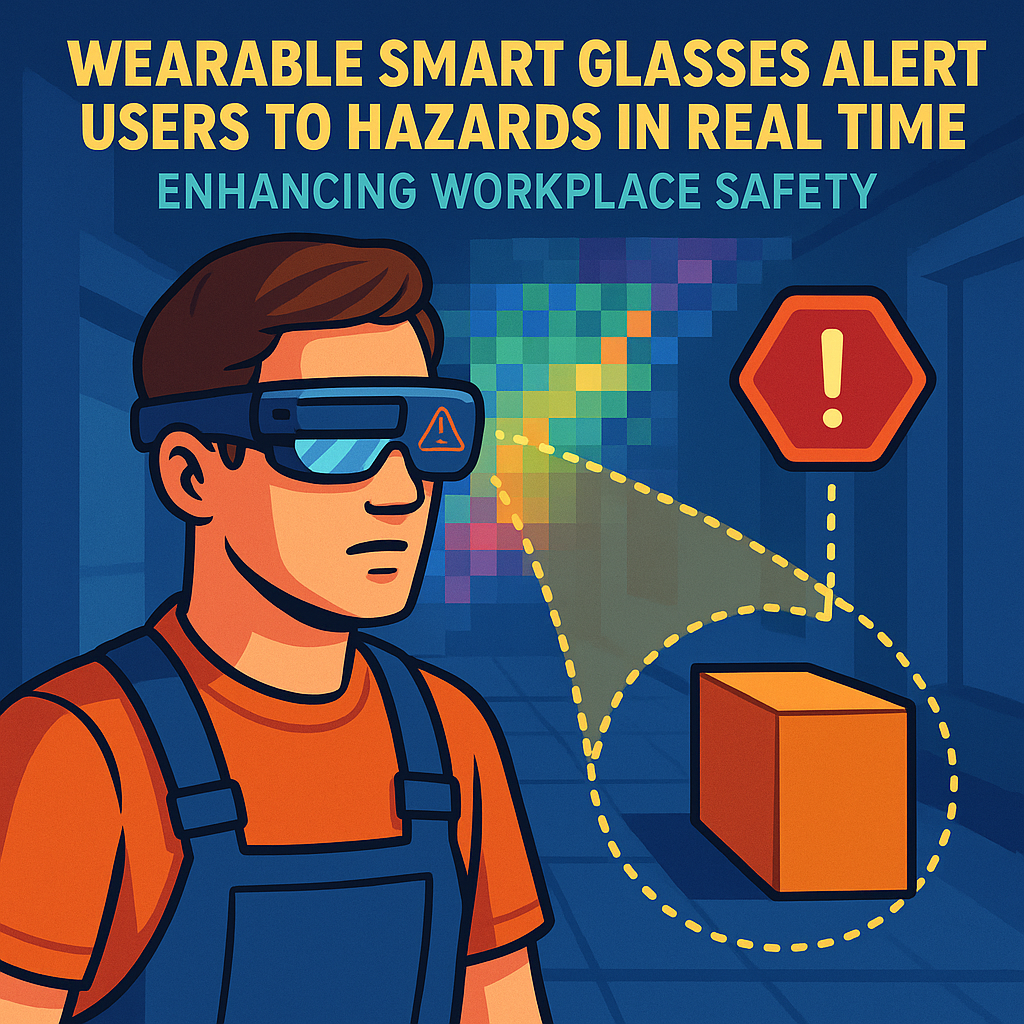
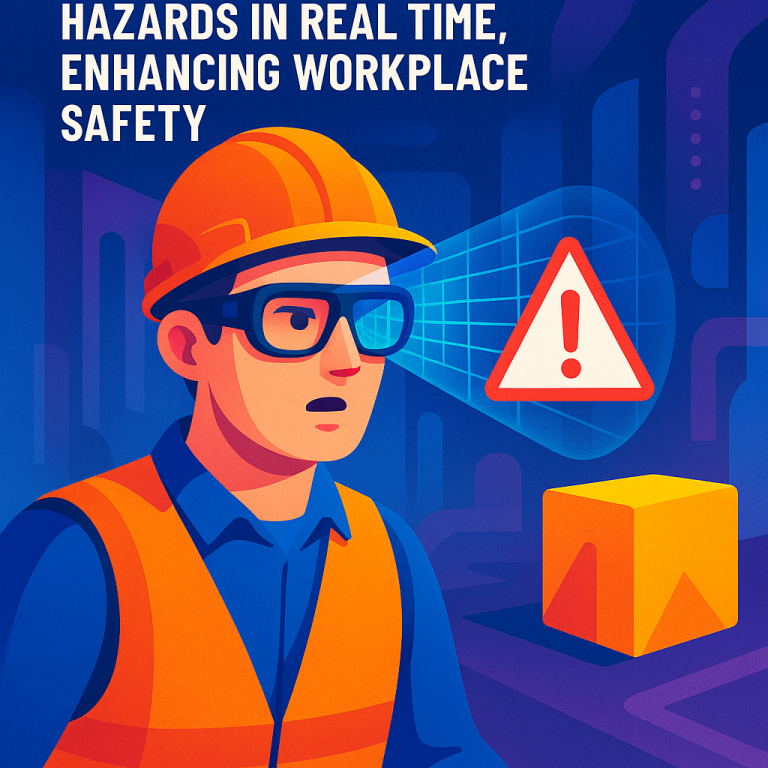
Wearable Smart Glasses Alert Users to Hazards in Real Time, Enhancing Workplace Safety
Invented by Chen; Peii, Karunakaran; Kiran
Falls are a big problem, especially for older adults and people with brain injuries or disabilities. What if a simple wearable device could warn you before you trip or bump into something? Here, we’ll walk through an innovative patent application that brings this idea to life. We’ll explore why this technology matters, how it builds on past inventions, and exactly what makes it special. Let’s get started.
Background and Market Context
Every year, millions of older adults and those with certain health issues experience falls. These accidents can cause serious injuries, huge medical bills, and a loss of confidence. According to the CDC, about $50 billion is spent in the United States alone on treating non-fatal fall injuries each year. Most falls happen at home or in hospitals—places where we expect to be safe.
Why do these falls happen so often? Moving around safely takes a lot of brainpower. We have to plan our steps, watch out for obstacles, and react quickly when something is in our way. For many people, especially those with physical or thinking challenges, these tasks are much harder. Slow reaction times, trouble with balance, or not noticing things in the way can all lead to accidents.
Current solutions mostly fall into two groups. First, there are walking aids like canes and walkers. These help with balance, but they don’t warn users about objects in their path. Second, there are fall alarms. These devices alert someone after a fall has already happened, or let caregivers know when a person tries to get up from a bed or chair. While helpful, neither of these options actually prevents falls before they happen.
Some hospitals use colored wristbands or surveillance cameras to track high-risk patients. There are also sensors that can tell if someone is getting out of bed. However, studies show that these solutions don’t do enough to stop falls, especially in busy places like hospitals or in the privacy of someone’s home. Plus, there’s even less technology for people living independently at home.
Meanwhile, car safety technology has come a long way. Modern vehicles use cameras, radar, and other sensors to warn drivers about obstacles and even help avoid crashes. But there is no similar, simple system for people to use as they walk around. Research on obstacle detection for people—not cars or robots—has mostly focused on helping those with blindness or severe vision problems. Even then, these systems often use pre-loaded maps instead of real-time sensing, and they don’t adjust to a user’s walking speed or reaction time.
There’s a clear need for a new, person-centered assistive technology. It should help people with mobility or thinking problems stay aware of their surroundings, avoid hazards, and feel safer as they move about their homes, hospitals, or communities. This is where the newly proposed wearable hazard alert system steps in, aiming to fill the gap and give people a new sense of independence and safety.
Scientific Rationale and Prior Art
Let’s look at what has already been tried, and why these efforts haven’t fully solved the problem. Earlier inventions in the assistive tech space focused on either helping people after they fall, or offering basic support for walking. For example, walkers or canes make walking easier but don’t know if a table or toy is in the way. Fall alarms only react after an accident, not before.
Some research has looked at more advanced solutions, especially for people with vision loss. These systems use cameras or sensors to “see” obstacles and guide the user. However, they often rely on maps that don’t change, which is a problem in real-life environments where furniture or other objects can move. Plus, they tend to ignore the unique needs of people who can see but have other challenges, such as slow reaction times or poor balance.
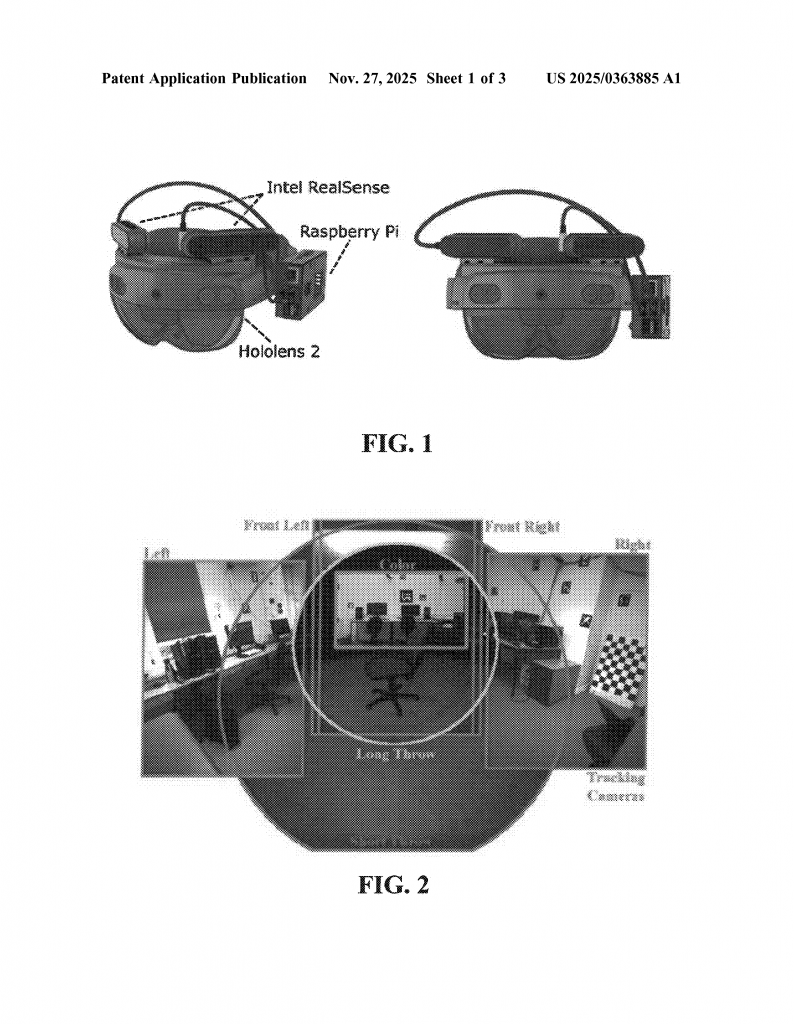
One recent step forward involved using devices like Microsoft’s HoloLens, a head-worn computer with cameras and sensors. An early prototype used the HoloLens to scan the user’s environment and give visual and sound warnings when an object was nearby. This was a big improvement, but it had some serious drawbacks:
First, the field of view—the area the device could “see”—was too small. Users had to turn their heads a lot to scan the whole room, and they could miss objects outside their direct line of sight. Second, the device updated its readings only once per second. Since most people walk at about one meter per second, this meant warnings could come too late. Third, the device did not personalize for the user’s size, walking speed, or reaction time. It was a “one-size-fits-all” solution, which isn’t safe for everyone.
Other inventions in the market have tried to bring car-level safety to people, but with mixed results. Devices that use sensors like LiDAR (which measures distance using laser light), cameras, or even sonar have been used in cars and robots, but not much for human navigation. When used for people, the focus has been on the blind, often ignoring those who can see but have trouble moving or thinking quickly.
What’s missing in all of these earlier solutions is a wearable, real-time system that:
- Detects hazards as the user moves, not just in fixed spots.
- Works in homes, hospitals, and anywhere else the user goes.
- Adapts to personal needs, such as walking speed or reaction time.
- Warns the user before a fall can happen, using easy-to-understand alerts.
The new patent application seeks to address all these needs using a smart combination of sensors, a head-mounted display, and special computer algorithms. It doesn’t just react to what happens; it helps prevent falls before they occur, and it does it in a way that is tailored to each person.
Invention Description and Key Innovations
Let’s dig into what makes this wearable hazard alert system unique and how it works, step by step.
The system is made up of a few key parts:
- A head-mounted display (HMD), like smart glasses or a visor, that sits on the user’s head. This display can show images or alerts right in the user’s line of sight.
- Multiple sensors attached to or near the HMD. Some sense depth (how far away objects are), while others take regular pictures of the environment.
- At least one computer processor, either built into the HMD or connected wirelessly, that processes all the sensor information and decides when to warn the user.
Here’s how the system works in real life:
As the user moves through their environment, the sensors collect data about what’s around them. The depth sensors create a special kind of picture called a “disparity map.” This map shows how far away different points in the space are from the user. The processor analyzes these maps in real time, looking for objects that could be hazards—like a chair, a toy, or a slippery spot on the floor.
But the system doesn’t just look for objects; it also figures out how close these hazards are to the user. It creates invisible “zones” around the person—a danger zone (very close and risky) and a warning zone (a bit farther away but still worth paying attention to). These zones are not one-size-fits-all; they are shaped and sized based on the user’s own body, walking speed, and even reaction time. For example, someone who walks faster or reacts slower will have bigger zones to give them more time to avoid trouble.
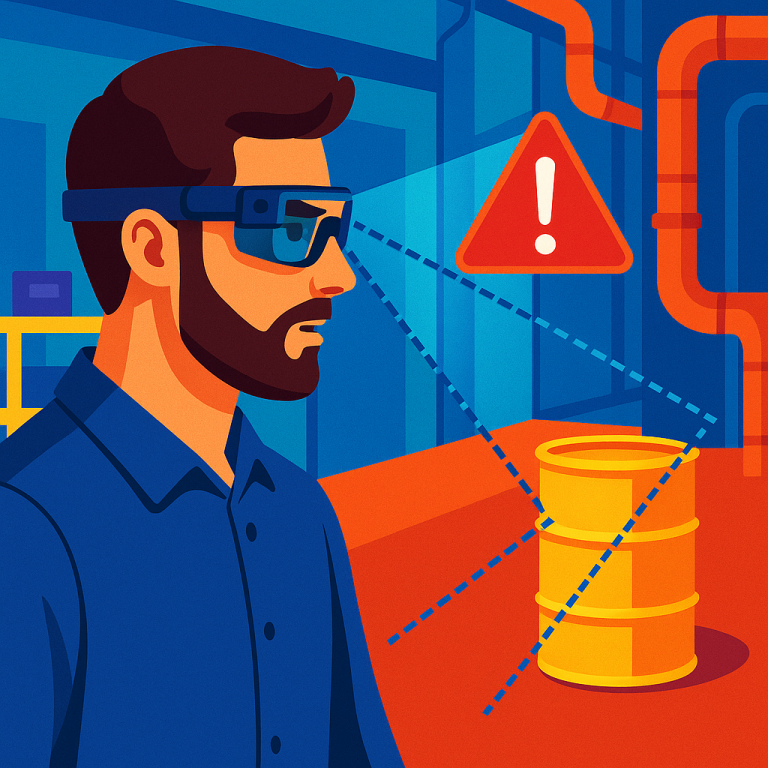
When the system spots a hazard that enters one of these zones, it sends an alert to the head-mounted display. The user can receive this warning in different ways: a flashing image, a sound, or even a gentle vibration. The alert also shows exactly where the hazard is in relation to the user, helping them avoid it. The type of alert can be personalized, so it works best for each person’s needs and preferences.
Here are the main innovations that set this invention apart:
1. Personalized, Real-Time Hazard Detection
The system isn’t generic; it adjusts everything to suit the user’s height, width, speed, and reaction time. If you walk faster or have slower reflexes, the system gives you more space and more warning. It constantly updates as you move, so the hazard zones move with you and react to your personal movement patterns.
2. Multiple, Coordinated Sensors
The device uses more than one type of sensor—like stereo cameras for depth, regular cameras for images, and even LiDAR or sonar for extra safety. These sensors are placed around the HMD to cover a very wide field of view, up to 270 degrees, so hazards aren’t missed even if they’re not right in front of you.
3. Smart Computer Processing
The processor running the system uses clever computer algorithms to quickly find hazards and decide which one is most likely to cause a problem. It removes things like the floor from its calculations so it doesn’t warn you about safe surfaces. It even matches up data from different sensors to make sure it only warns you about real hazards, not false alarms.
4. Flexible, Adaptive Alerting
Not everyone reacts the same way to warnings. The system lets users—or their caregivers—choose how they want to receive alerts. Some may prefer visual signs, others may want a sound or vibration. The system can even use machine learning to get better over time, adjusting itself as it sees how the user moves and reacts each day.
5. Designed for a Wide Range of Users
While past inventions were mostly for people with vision loss, this system is designed for anyone at risk of falling. That includes older adults, people with brain injuries, and those with physical or thinking problems. The system can be used at home, in hospitals, or anywhere else the user goes.
6. Seamless Integration and Ease of Use
The hardware is built to be lightweight and wearable, not bulky or awkward. The software can run on the head-mounted display itself, on a small computer like a Raspberry Pi, or even connect to remote computers for extra power. Everything works together in real time, so there’s no lag or confusion.
To make the system even more helpful, the user can set preferences or enter personal data, like their typical walking speed or how quickly they respond to a visual cue. The system can also measure these things automatically, by asking the user to walk a certain distance or tap the screen when a color changes. All this information is used to personalize the warning zones and make the alerts as timely and helpful as possible.
Another smart feature is the use of “most probable collision” logic. When there are several objects nearby, the system figures out which one is moving toward the user the fastest or is most likely to be in their path. It focuses the alerts on this object, so the user isn’t overwhelmed by warnings about every single thing in the room.
The system is also future-proof. It’s built so new types of sensors, new alert styles, or smarter algorithms can be added later. It can be adapted to work with new head-mounted displays or even connect to the cloud for more advanced processing. This means the system can keep getting better as technology advances.
Conclusion
Falls are a major problem for millions of people, causing pain, fear, and high medical costs. Current tools—like canes, walkers, or fall alarms—help, but they don’t warn users before a fall happens. The new wearable hazard alert system described in this patent application brings together the latest in sensors, computing, and user-centered design to fill this gap. It’s smart enough to detect hazards in real time, adapt to each person’s needs, and deliver simple, clear alerts where and when they matter most.
By learning from past inventions and focusing on what real users need, this system stands out as a practical, effective way to prevent falls before they happen. It has the power to give people more confidence, independence, and safety—whether at home, in the hospital, or out in the world. As the population ages and more people face mobility challenges, this kind of technology isn’t just helpful—it’s essential.
Click here https://ppubs.uspto.gov/pubwebapp/ and search 20250363885.