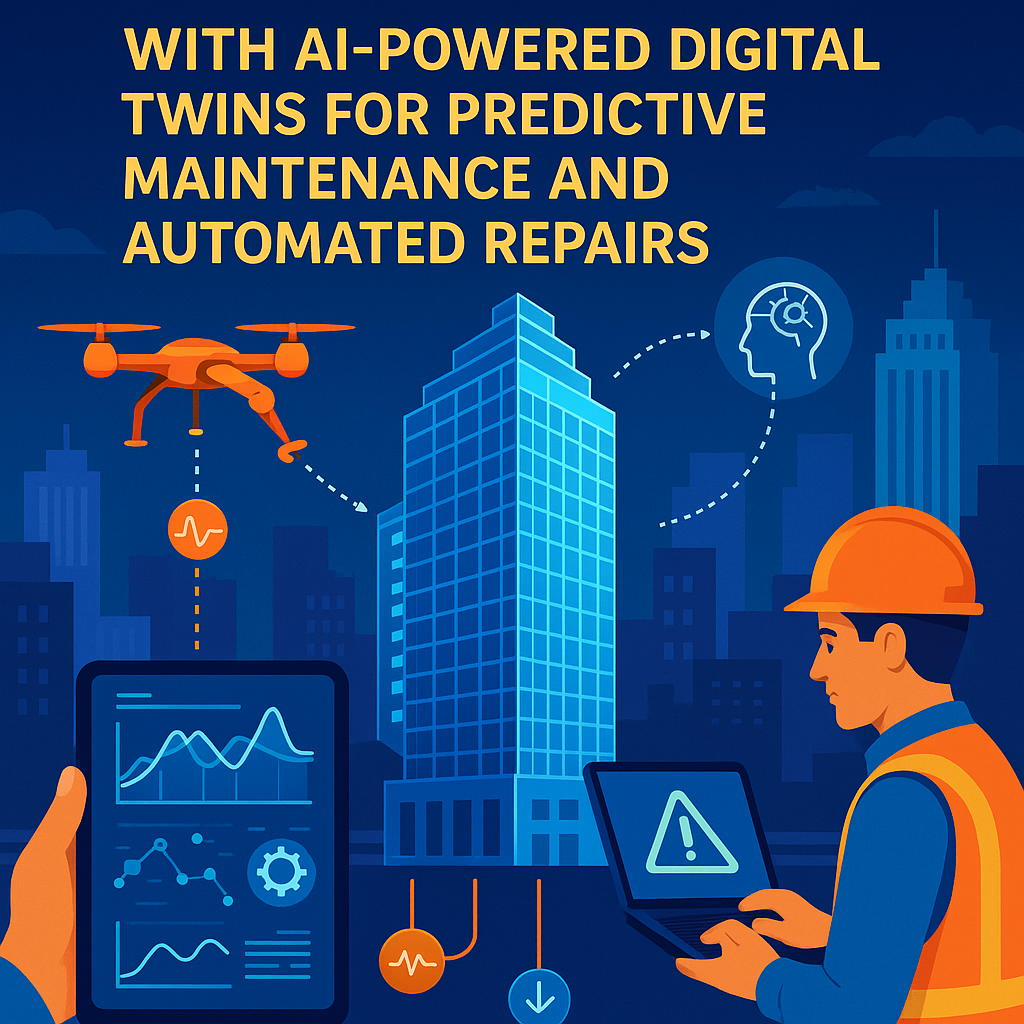
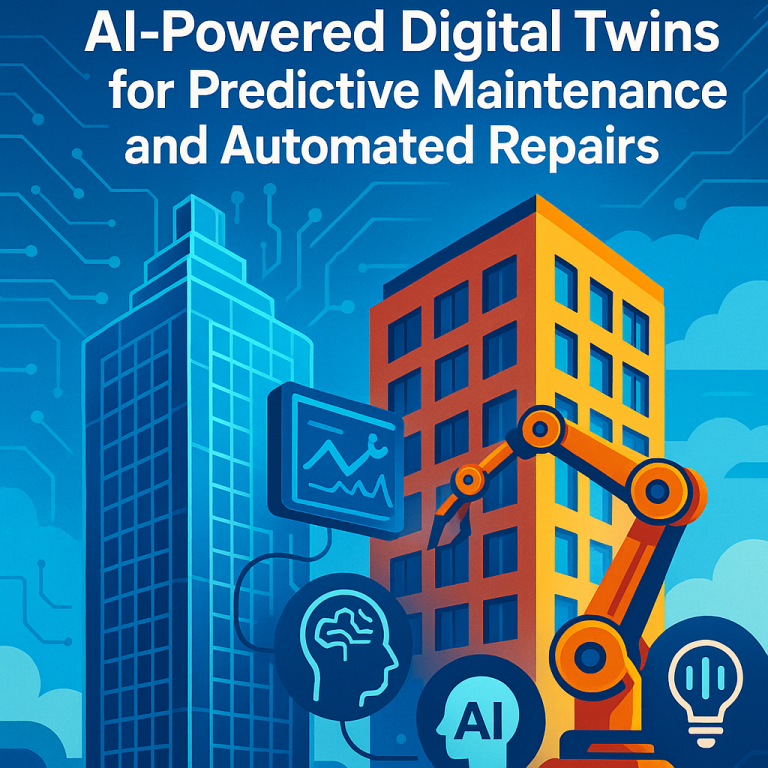
Headline: Transform Building Safety with AI-Powered Digital Twins for Predictive Maintenance and Automated Repairs This headline highlights the invention’s real-world application (building safety), emphasizes its innovative aspect (AI-powered digital twins), underscores strategic benefits (predictive maintenance and automated repairs), and is optimized for search terms relevant to business leaders in construction, infrastructure, and property management.
Invented by Hansen; Scott Robert, Hansen; Robert Edwin, Hansen; Louisa Marie
Short Introduction
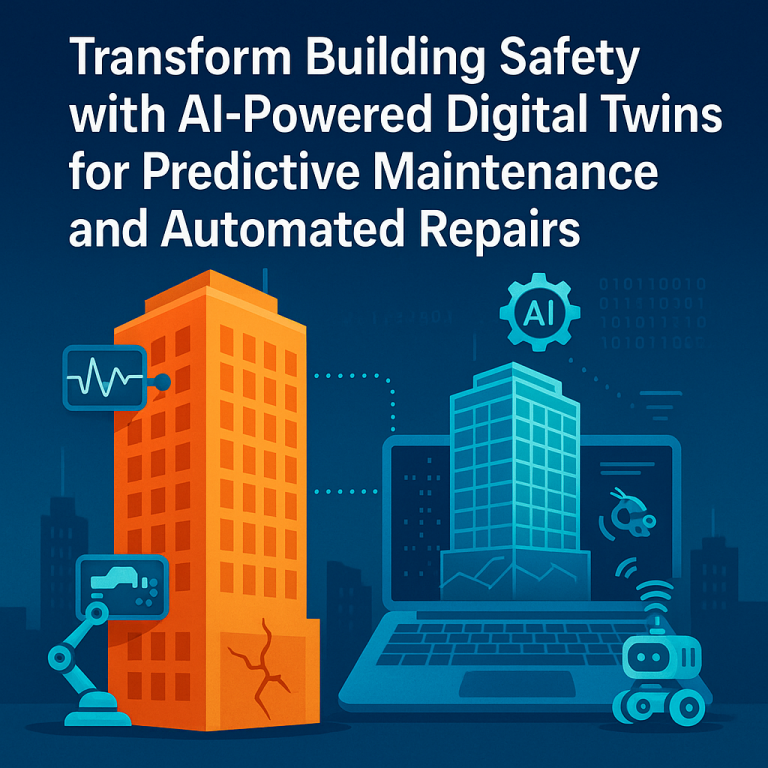
Structural health is a big concern for things like bridges, planes, and buildings. When these structures get weak or damaged, it can lead to costly repairs or even disasters. A new patent application offers a smart way to watch over these structures using sensors, artificial intelligence (AI), and robots. This blog will explain why this invention matters, how it works, and what makes it different from past ideas.
Background and Market Context
Our world is built on top of giant structures—think highways, skyscrapers, airplanes, and power plants. These need to be strong and safe, not just for their own sake, but because people’s lives depend on them. Over time, weather, earthquakes, heavy loads, and just plain aging can cause cracks, rust, or other problems that weaken these structures. If problems aren’t found early, they can get much worse. Fixing a small crack is simple, but fixing a collapsed bridge is not.
Traditionally, engineers check structures by walking around, looking, and sometimes using simple tools to measure things like vibration or cracks. This process takes a lot of time, people, and money. Sometimes, problems are missed because people can’t see inside walls or hidden places. Other times, checks are so rare that a problem grows large before anyone notices.
In the last few years, the market has pushed for better answers. Smart cities, airlines, and governments want real-time information about their assets. They want to know: Is my bridge safe? How much longer will this building last? Can we fix problems before they get big? The push for “smart infrastructure” means more sensors, more data, and more automation.
But there are challenges. Just sticking a few sensors on a bridge isn’t enough. You get a huge pile of numbers that are hard to understand. Sometimes the sensors break or give wrong readings. Even if you get good data, someone still needs to figure out what it means and decide what to do. And finally, when a problem is found, someone has to go out, look at it, and fix it.
This is where the invention in the patent application comes in. It tries to solve these problems all at once: gather better data, make sense of it automatically, learn from past mistakes, and even send robots to fix things—all without needing a person to watch every step.
This approach could save companies and cities a lot of money. It could help prevent accidents, save lives, and even make insurance cheaper. It’s not just about fancy tech; it’s about keeping people safe while making sure our bridges, planes, and buildings last as long as possible.
Scientific Rationale and Prior Art
To understand why this invention stands out, it helps to know what came before and what science supports it.
For many years, engineers have used sensors like strain gauges (which measure stretching) and accelerometers (which measure shaking or vibration) to check on structures. If you put sensors on a bridge, for example, you can see how it shakes when cars drive over it or when the wind blows. If shaking changes a lot, it can mean something is wrong.
But sensors alone are not enough. The real question is: what do these numbers mean? Are they normal, or do they show a problem? To answer this, people have used two main ideas:
1. **Physics-based models:** These are computer models that try to predict how a structure should behave under different conditions. If the real measurements are very different from the model, there may be a problem.
2. **Data-driven models:** These use past data and AI (machine learning) to “learn” what normal looks like, and then spot when something is different.
Both approaches have weaknesses. Physics-based models can be slow or not match the real world perfectly. Data-driven models need lots of data and sometimes don’t know why something is wrong, just that it is.
Past inventions have used sensors and models, but usually not together in a smart way. Some companies have made digital twins—virtual versions of a bridge or building that update with real data. Others have used drones to fly around and take pictures or measurements. Sometimes, AI is used to spot cracks in photos. There are even robots that can seal up small cracks if you show them where to go.
But usually, these pieces are not fully connected. The sensor data doesn’t always update the digital twin. The AI doesn’t always learn from its mistakes. The robot doesn’t get instructions automatically. And the system almost never adapts by itself based on what it learns over time.
Another problem with earlier solutions is that they often need a fast internet connection or a big computer in the cloud. If the connection breaks, the system can’t work in real time. Also, most older systems can’t explain what they’re doing or show results in a way people can see and understand quickly.
In the scientific world, there is a push to combine physics-based models with machine learning. This is called “physics-informed neural networks.” These models use both the laws of nature (like how steel bends) and learned data patterns to make better predictions. There’s also a move to use reinforcement learning—where the AI learns from feedback, like a child learning what is right or wrong.
The invention in this patent brings these threads together. It uses a network of sensors, a perception module to clean up the data, a digital twin, a physics-informed neural network, an anomaly detector, reinforcement learning, and robots or drones for repair—all working together. It even keeps learning as it gets more data.
This combination is new because it doesn’t just detect problems; it learns, adapts, and fixes them. It can run on small computers right on the structure or connect to the cloud when possible. It even provides clear pictures and reports for people to use. That’s a big leap from past ideas.
Invention Description and Key Innovations
Let’s break down how this invention works, step by step, and what makes it truly different.
**1. Smart Sensor Network**
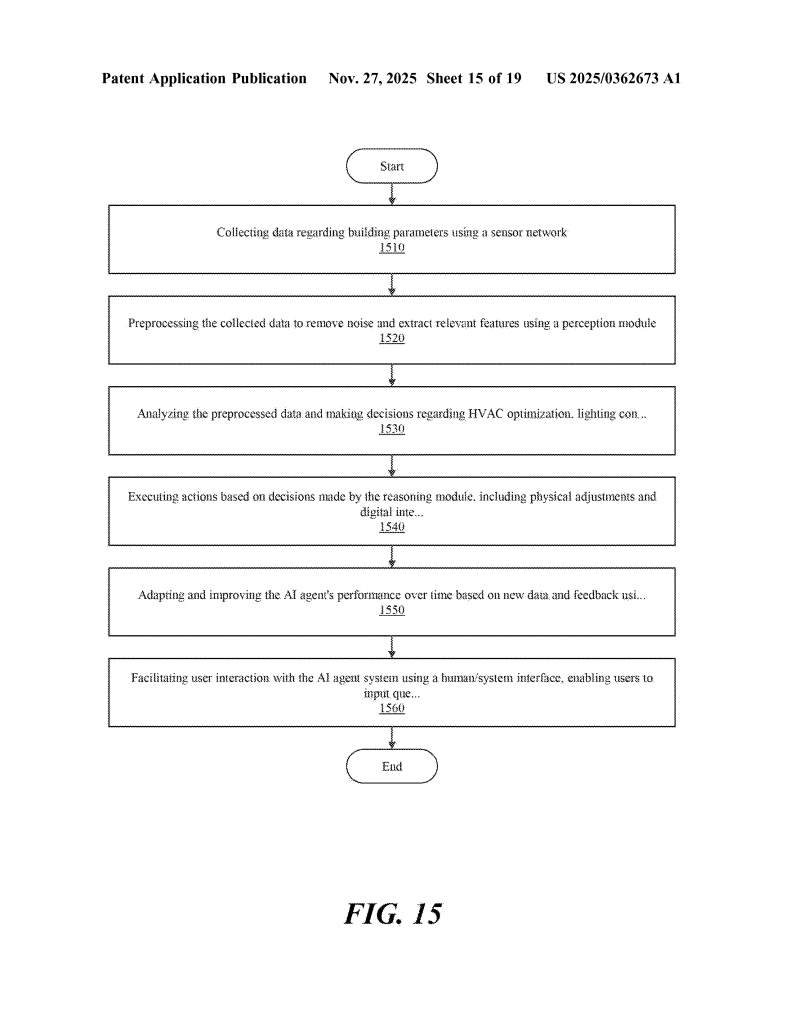
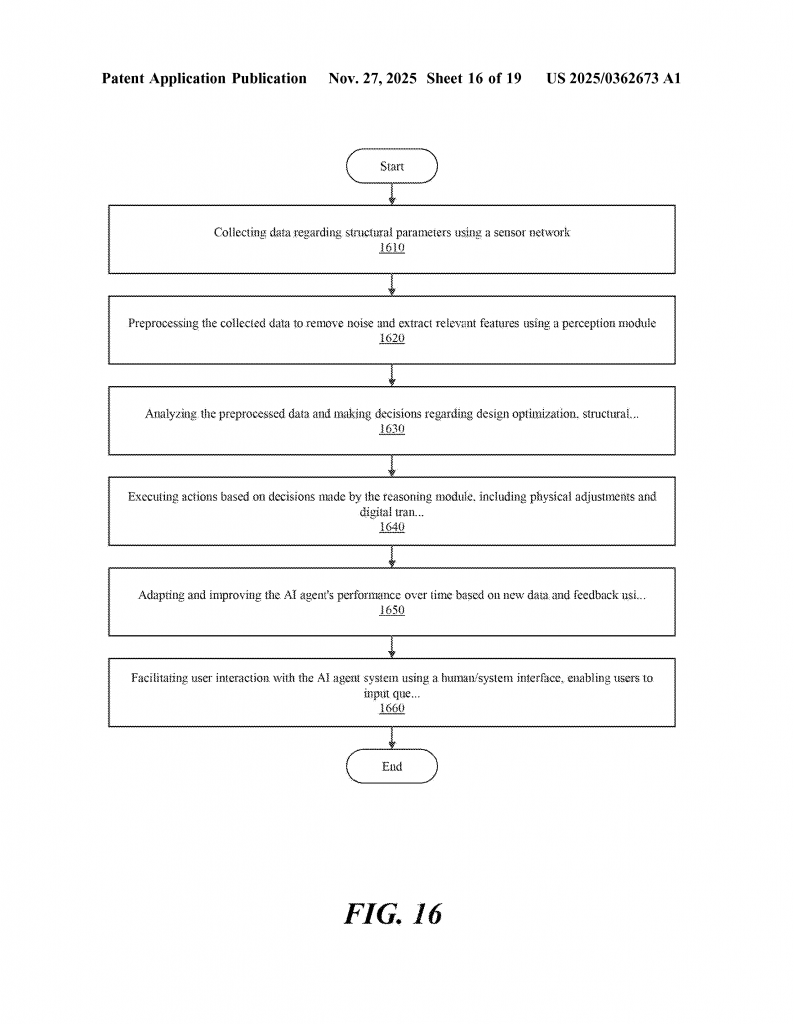
The system starts by putting a group of sensors on the structure. These include strain gauges (to measure stretching), accelerometers (to measure shaking), and temperature sensors (to see if heat or cold is affecting things). Some versions add humidity sensors or even cameras. These sensors send their readings to a processing device, like a small computer attached to the structure.
**2. Data Cleaning and Feature Extraction (Perception Module)**
Raw data from sensors can be messy or noisy. The perception module uses a “Gaussian filter” to smooth out the bumps and “z-score normalization” to make the numbers easy to compare. It then turns the cleaned data into useful features, like finding the most common vibration frequency using something called a fast Fourier transform (FFT). This helps the computer focus on what matters.
**3. Parallel Digital Twin and Neural Network Models**
The system uses two brains at once:
– The digital twin is a computer model of the real structure. It updates itself based on the sensor features. For example, if a bridge starts to flex more than normal, the digital twin updates its model to match.
– The surrogate model is an AI neural network. It learns from both the physics of the structure and the real data. It gets smarter over time, predicting what the sensors should read. If the real sensor readings start to differ from what the neural network expects, it’s a sign that something may be wrong.
**4. Anomaly Detection**
This is the system’s alarm bell. It looks at the difference (called the “residual”) between what the neural network predicts and what the sensors actually measure. If this difference, or “anomaly score,” gets bigger than a set limit, it means something unusual is happening—a possible crack, loose bolt, or other problem.
**5. Self-Adjusting AI (Reinforcement Learning)**
Instead of sticking with one way of working forever, the system learns from feedback. If someone checks the structure and finds that an alarm was false, the AI can adjust its thresholds or how often it samples data. This makes the system smarter over time, reducing false alarms and catching real problems sooner.
**6. Autonomous Maintenance Response**
When the anomaly score is too high, the system doesn’t just send an email. It takes action. It gives commands to:
– Drones that can fly to the exact spot, look closely, and take more pictures or measurements.
– Robots that can move to the problem area and seal cracks or apply repairs.
The digital twin helps by refining its mesh (making its model more detailed) around the danger spot and figuring out what repairs are needed.
**7. Maintenance Tracking and Visualization**
Every action, sensor reading, model update, and repair is stored in a historical database. The system can show a color-coded 3D map of the structure, highlighting problem spots. It can also predict how much life is left in each part of the structure and schedule future inspections or repairs.
**8. Edge and Cloud Operation**
The whole system can run on a computer right on the structure (“at the edge”), so it works even if there’s no internet. When a connection is available, it can send data to a cloud server for deeper analysis or long-term trend spotting.
**9. Distributed Sensor Swarms**
For very large structures, the invention allows small sensor agents to form a “swarm,” each running its own AI. They talk to each other over a wireless mesh, sharing scores about possible cracks. If most sensors in an area agree that something is wrong, the system sends out the drones or robots. This makes the system robust—even if some sensors fail, others pick up the slack.
**10. Human-Friendly Interface**
People can interact with the system through a clear interface that shows text, voice, images, and video. They can ask questions, see what the AI is doing, and get explanations for decisions. This helps build trust and makes the system usable by non-experts.
**What Makes It Unique?**
– Combines physics-based and AI models for better predictions.
– Adapts and learns from human feedback and past actions.
– Automates not just detection but also inspection and repair.
– Works in real time, even without cloud access.
– Handles both small and large structures using distributed sensor swarms.
– Gives clear visual feedback for people to understand and act on.
**Actionable Takeaways**
If you own, design, or manage bridges, buildings, or other important structures, using a system like this could:
– Catch small problems before they turn into big ones.
– Reduce inspection and maintenance costs.
– Improve safety for everyone.
– Extend the life of your assets.
– Give you clear, easy-to-understand reports and visuals.
Conclusion
This patent application describes a new way to keep watch over important structures, blending sensors, AI, digital twins, and robots into one smart package. It stands out by learning from data, adapting over time, and taking real action—moving beyond just alarms to full autonomous maintenance. The system is flexible, robust, and designed with people in mind. For anyone in construction, engineering, or asset management, this invention could set the standard for safe, smart, and self-maintaining infrastructure. Early adoption may offer big savings, peace of mind, and a safer world for all.
Click here https://ppubs.uspto.gov/pubwebapp/ and search 20250362673.