Centralized Platform Streamlines AI Agent Registration and Management for Enterprises

Invented by SOHUM; Anuj Khanna, FOONG; Charles Yong Jien, RAMAKRISHNA; Madhusudana, Affle (India) Limited, India
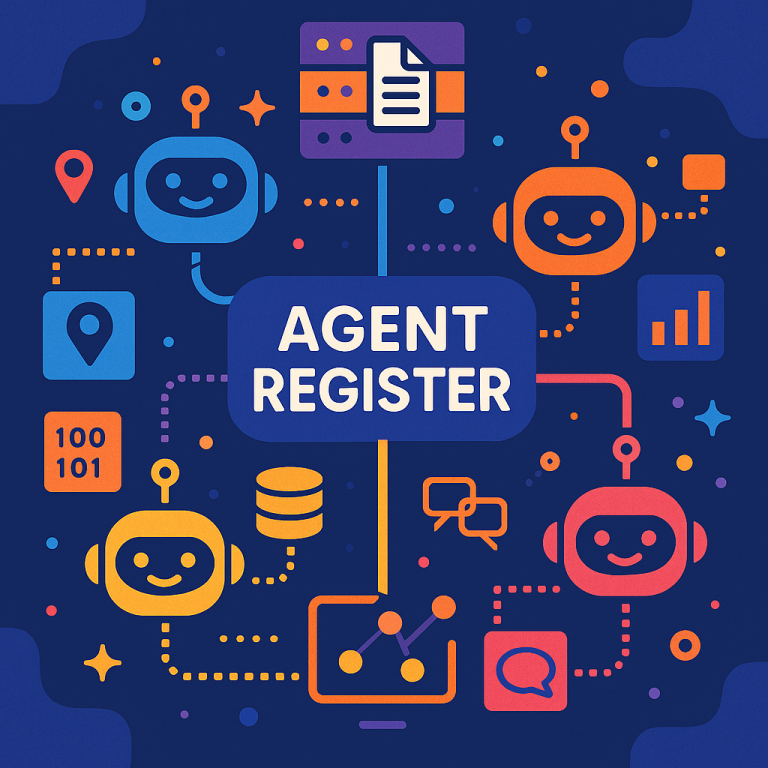
Artificial intelligence is quickly changing how we live and work. But as more AI agents show up across different industries, there is a big need to keep track of them in a safe, organized, and clear way. This article will help you understand a new invention that does just that: a system for registering details of intelligent communicative agents. We’ll look at why it’s needed, the science behind it, and what makes this invention special.
Background and Market Context
AI is everywhere. From helping doctors look at scans, to giving you recommendations while shopping online, or helping cars drive themselves, AI agents—or smart computer programs—are involved in so many parts of life and business. These agents can talk, make decisions, learn new things, and work together. But as more and more of these agents show up, it becomes harder to keep track of them.
Let’s imagine a hospital. There might be different AI agents helping with patient data, lab results, or even guiding patients to the right room. In an online store, other agents help you find what you want, answer your chat questions, or keep track of what’s in stock. Each of these agents needs to be managed, trained, and watched to make sure they’re doing the right thing.
But here’s the problem: most companies today just keep basic logs or simple lists of their AI agents. There may not be a single clear place to see what agents exist, what they do, what data they’ve used for learning, and how they interact with each other. This leads to confusion, mistakes, and sometimes even dangers—like agents using data they should not, or making decisions with hidden biases.
Another challenge is trust. People worry about AI making mistakes or acting in unpredictable ways. Governments and groups working on AI rules want companies to track which agents are being used, how they are trained, and if they follow the rules. This is where the need for a strong, organized system comes in. A registry gives companies, users, and regulators a way to see and manage all agents in one place.
On top of that, the AI world is growing fast. Agents are not just in big tech companies or research labs; they are in homes, factories, banks, schools, and even cars. As the number of agents grows, it’s no longer enough to just keep a list in a spreadsheet. Companies need a system that can handle everything: keeping track of who built each agent, what data it uses, how it behaves, and who can use it.
This is why a new system for registering intelligent communicative agents is so important for today’s market. It helps companies work smarter, stay safe, and build trust with people who use their services. It also helps meet government rules and make sure AI is used in a fair and safe way.
Scientific Rationale and Prior Art
Let’s look at what has been tried before and why it’s not enough. In the past, companies have used simple ways to keep track of their AI agents. This might be a list of agents, some notes about what they do, and maybe a record of who can talk to them. Some bigger companies have systems for logging AI activity, but these are often just for checking if the agent worked or failed.
But as AI agents get smarter and are used in more places, these old ways are not enough. Here’s why:
First, AI agents are not all the same. Some are simple and do one thing; others are complex and can learn or even talk to other agents. It’s hard to keep track of what each agent can do, what data it uses, and how it’s allowed to behave.
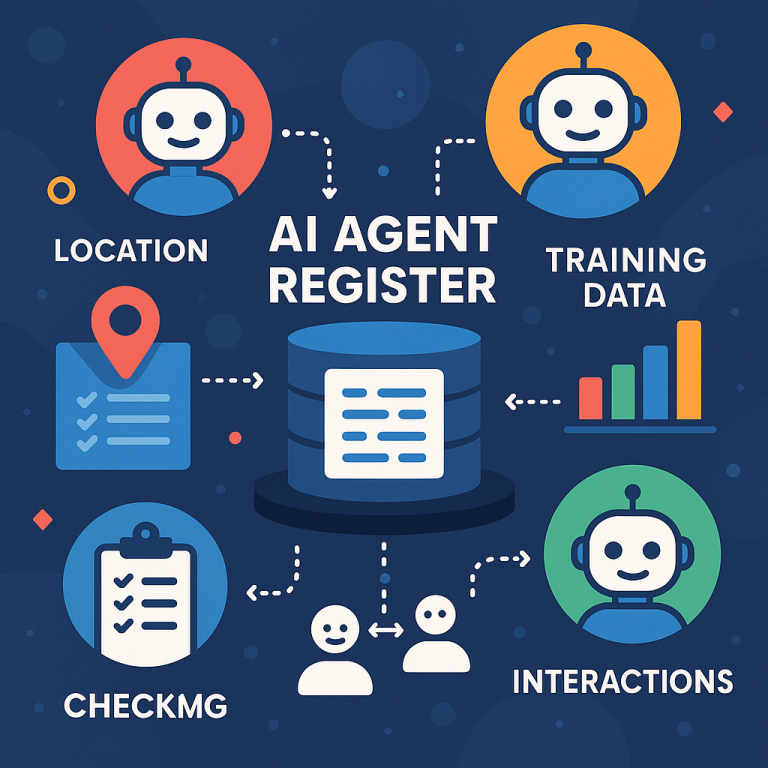
Second, there is the problem of data. AI agents learn from data, and the data can change. Some data is fixed, like a person’s date of birth. Some data changes, like a person’s location. Other data is about past choices or actions, and some data is actually guessed by the agent based on what it has learned. Without a smart system, it’s hard to know what data an agent has seen, what it can use, and what it has learned from it.
Third, agents sometimes need to talk to each other. For example, a chatbot might need to ask another agent for a product’s price or stock level. If the agents can’t talk in a safe and clear way, mistakes or even security problems can happen. Old systems don’t have clear rules for how agents talk to each other, or for checking if the agent talking is the right one.
Fourth, there’s a need for rules and safety. With new laws and good practice guides for AI, companies must show that their agents act in a fair way, don’t use data wrongly, and don’t harm people. This means there must be a way to check what an agent has done, what data it used, and who allowed it to act.
Some systems try to solve these problems by making logs or using access control lists (which are like lists of who can use which agent). But these are often not enough. They don’t keep all the needed details in one place, and they don’t help companies see how agents are trained, how they behave over time, or how they talk to other agents.
This is why the invention described in this patent is a big step forward. It introduces a clear and organized way to register every detail about each agent, keep it up to date, and make sure only the right people and agents can use or talk to each other.
The new system also helps solve some very real problems in AI, like:
– Making sure agents don’t take actions they should not.
– Helping companies check if an agent is acting in a fair and safe way.
– Giving a way to see what data was used to train an agent.
– Making it easy to update agents or remove them when needed.
– Keeping a traceable record in case of mistakes or audits.
So, while there have been some tools for tracking agents, none have done all these things together in a simple and clear way. That’s what makes this invention so important.
Invention Description and Key Innovations
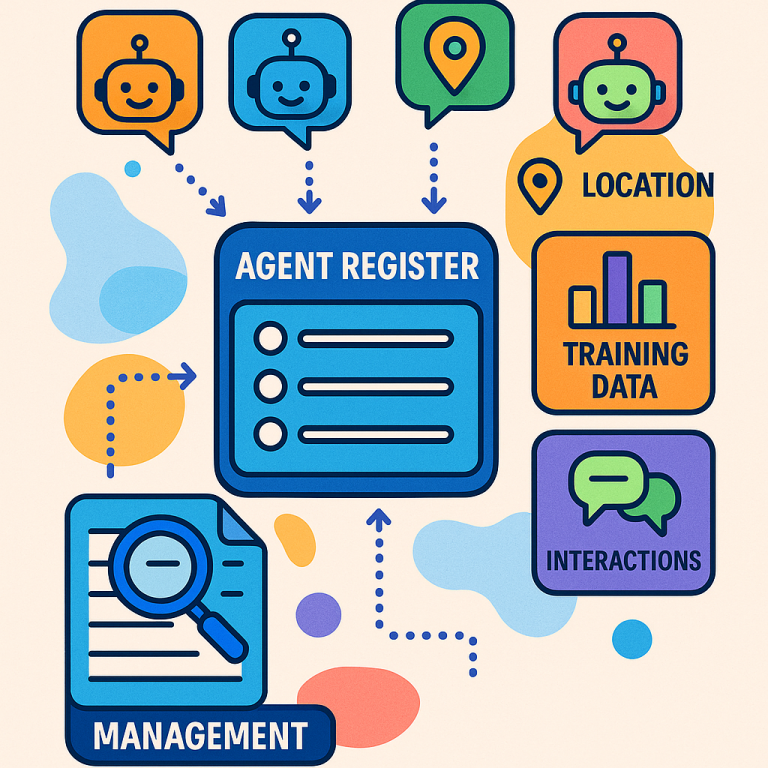
Now let’s dig into the heart of this new invention. Simply put, it is a system that acts like a smart library or register for all intelligent communicative agents in a company or organization. But it’s much more than a simple list.
First, the system has a memory unit. This stores all the information about each agent: what it is, who made it, what tasks it does, and how it was trained. This memory is not just a log—it’s organized so you can see if an agent is active, if it’s being updated, and what its purpose is.
The system uses processors, which are like brains, to help agents talk to each other and to watch their actions in real time. If two or more agents need to work together, the system helps them share the right information. It also checks to make sure they are acting as a team, not working against each other or doing double work.
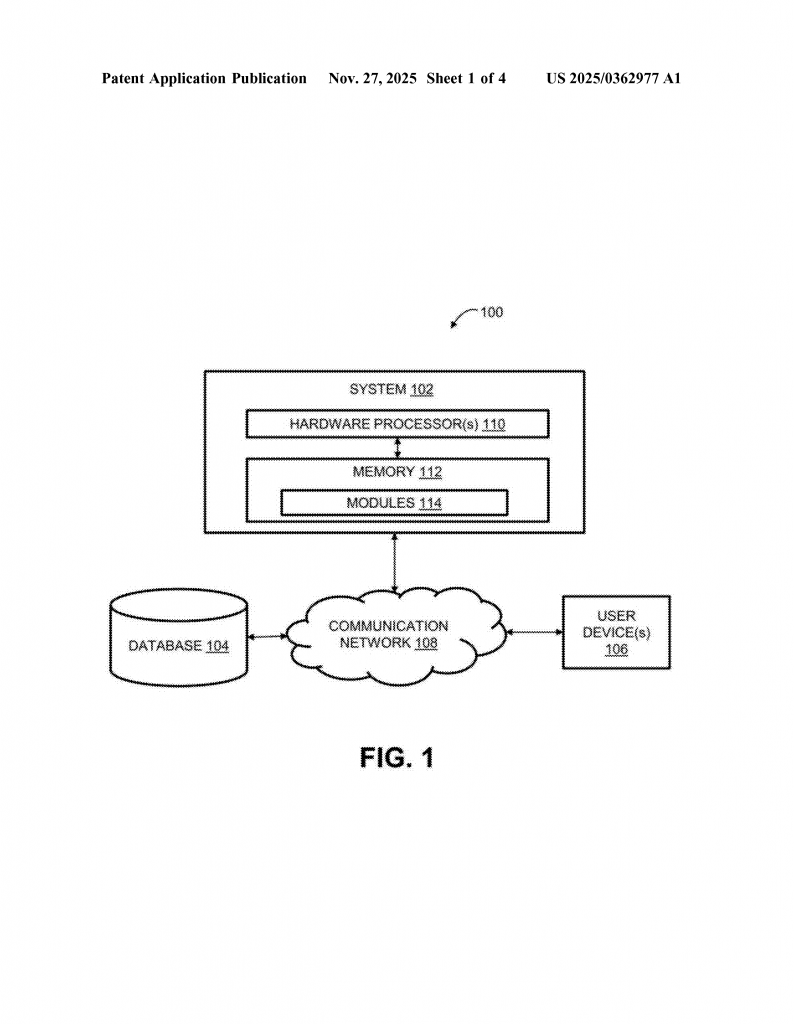
A central hub is part of the invention. This hub gets all the data about agent actions, communications, and updates from the processors. The hub makes sure everything is tracked and nothing is missed.
But the most important part is the intelligent communicative agent register. This is the main library for all agent details. It has different engines (which are like smart sections) for different jobs:
– The identification engine keeps track of each agent’s name, ID, status, and who can use it.
– The data processing engine stores all the learning data used for training each agent. It also keeps track of which data is fixed, which changes, and which is guessed or learned over time.
– The interactive engine manages how agents talk to each other, using smart rules and even neural networks (which are ways for computers to learn and talk like people do).
– The data storage engine watches how much and what kind of data each agent has or needs.
– The miscellaneous engine keeps details on things like how the agent sounds, how it acts, or even its “personality.”
The system also has communication networks. These are like roads for information, letting agents, the register, and user devices send and receive data quickly and safely.
A database is included too. This holds all the stored information, not just for today but for the future. It can handle many types of data, like health records, shopping history, or even a user’s likes and dislikes.
The invention allows agents to be trained using the information stored in the register. So if an agent needs to learn new things, it can get the right data and rules from the system.
The processors also have an access control tool. This makes sure only the right agents or users can do certain things. For example, only a medical agent can look at patient records, and only after being checked for the right rules.
The system is also flexible. It lets agents talk to each other without always needing a human in the middle. This makes things faster but also safer, since each talk is checked and logged.
What makes this invention really special is how it puts everything together. Before, companies needed many different tools to manage agents, data, and rules. Now, this invention gives one place for all of it.
Here’s a simple example. In a busy hospital, the system keeps track of every AI agent. If a new agent is added to read X-rays, the system records its ID, what it’s trained on, what data it can use, and who can talk to it. If another agent needs to ask it about a patient, the system makes sure they talk in the right way and that all information is logged. If rules change or the agent needs new training, the system updates everything and keeps a record, so nothing gets lost.
The invention also helps with things like:
– Making sure agents don’t use data they shouldn’t.
– Stopping agents from doing the same job twice.
– Letting agents learn new things safely.
– Giving companies a way to prove they follow laws and rules.
– Helping users see how and why an agent made a decision.
The invention is made to be simple to use, even in big companies. It works for many types of agents, in many industries—from health care, to banking, to online shopping, to smart cities.
In short, this system is like a smart, living library for all your AI agents. It makes it easy to see what agents you have, what they do, how they learn, and how they work with each other. It builds trust, keeps things safe, and helps companies adapt as AI keeps growing.
Conclusion
As the world of AI grows, the need for safe, clear, and organized management of intelligent agents is bigger than ever. This patent shows a new way to register, train, and watch over AI agents in a simple but powerful system. By bringing together all the needed tools—memory, processing, central hubs, smart registers, and clear rules—the invention gives companies and users a way to trust and control their AI. It’s a step toward making AI safer and more useful for everyone, no matter where or how it’s used.
Click here https://ppubs.uspto.gov/pubwebapp/ and search 20250362977.