Optimizing Cloud Storage: Smarter Data Caching for Secure, Scalable Multitenant File Systems
Invented by LEE; ROBERT, OSTROVSKY; IGOR, EMBERSON; MARK, FEIGIN; BORIS, KARR; RONALD
Cloud storage is everywhere, but not all storage is the same. Some storage is fast, some is secure, some is flexible, and some is just plain slow or hard to manage. Today, we’re taking a close look at a new patent application that tries to make cloud storage better for everyone—whether you are a business owner, a developer, or someone who just wants their files to be safe and easy to reach.
This article breaks down the patent into plain language, showing why it matters, how it builds on what came before, and what makes it new and special. By the end, you’ll understand how this invention could make cloud-based files and storage work smoother, faster, and smarter than ever before.
Background and Market Context
The internet has changed the way we store and use information. Not long ago, files lived on hard drives or USB sticks. Now, more and more files live in the cloud. The cloud means your files are kept on servers you don’t see, managed by companies like Amazon, Google, or Microsoft. You can get your files from anywhere, on any device, as long as you have internet. This is easy for users, but under the hood, it is very complicated.
Businesses want cloud storage because it saves money, scales up or down when needed, and is always on. They want to store lots of data, share it with different people, and keep it safe from loss or hackers. But as more people and companies use the same cloud, new problems pop up. Sometimes, files are slow to open. Other times, it is hard to make sure only the right person sees certain files. And if lots of people try to use the same storage at once, things can slow down—or even break.
Another big trend is multi-tenancy. This means one set of computers or disks serve many different customers at once. It’s like many families living in the same apartment building. It’s efficient, but you have to make sure one family’s noise or mess doesn’t bother the others. In cloud storage, “tenants” are companies or users. The storage system must keep each tenant’s files private and fast, even when everyone is using it at the same time.
At the same time, the way we store files is changing. Old-style files lived in folders and needed a traditional file system. Newer storage, called “object storage,” breaks files into chunks called “objects.” Object storage works well for big data, backups, and web apps, but it doesn’t always play nicely with apps that expect the old folder-file system. Bridging the gap between these two worlds is hard, but important.

Cloud storage providers want to make their systems flexible. They need to let users access files quickly, even if the files are really stored far away, deep in the cloud. They also want to avoid wasting resources and money, by only keeping the most-needed files close at hand. All this needs to happen automatically, without the user ever noticing.
In short, the market is hungry for new ways to make cloud storage faster, safer, easier to manage, and more efficient, especially as more businesses move their most important work to the cloud. This patent application aims to solve some of the hardest problems faced by cloud storage providers and their customers.
Scientific Rationale and Prior Art
To understand what’s new in this patent, it helps to see what has come before. For years, storage systems have used several tricks to make things run better. One old trick is caching. Caching means keeping copies of often-used files or data in a fast place, so you don’t have to go back to the slow, far-away storage each time. Think of it like keeping snacks on the kitchen counter instead of running to the store every time you’re hungry.
Another old idea is separating storage into layers. One layer might handle the file system—organizing files and folders, managing who can see what, and so on. Another layer handles the physical storage—writing bits to disks or flash drives. This split makes it easier to upgrade or change how storage works without starting over.
In the past, systems often had block storage (good for databases), file storage (good for files and folders), and object storage (good for big web apps and backups). Each had pluses and minuses. But as cloud use grew, companies wanted the best of all worlds: the speed and simplicity of file storage, the flexibility and durability of object storage, and the efficiency of sharing resources across many users.
Older multi-tenant systems mostly focused on keeping one user’s data safe from another’s. But as cloud use exploded, new headaches appeared. When one user’s workload spiked, it could slow down everyone else. When many users stored lots of rarely-used data, the system wasted money keeping everything close at hand.
Some earlier inventions tried to use caching policies—rules that decide what data stays in the fast cache and what gets pushed to slower storage. But these policies were usually fixed, or changed only by system admins. They didn’t adapt well to sudden changes in how users accessed their files.
Other solutions tried to use single-tenant nodes—dedicated systems for each user—to give better performance and privacy. But this was costly, hard to scale, and wasted resources when some users weren’t using their full capacity.
Some systems could scale up or down by adding or removing resources, but this often meant manual work or downtime. And few systems combined all these features—smart caching, multi-tenancy, scalable resources, and file/object storage blending—into one smooth package.
Putting it all together, the world had tools for caching, for multi-tenancy, for scalable storage, and for mixing file and object storage. But no one had a simple, automatic way to blend all these features, keep costs down, and give every user the speed and privacy they wanted—until now.
Invention Description and Key Innovations
This patent presents a new cloud storage system that brings together many good ideas into one clever design. Here’s how it works, explained in simple words.
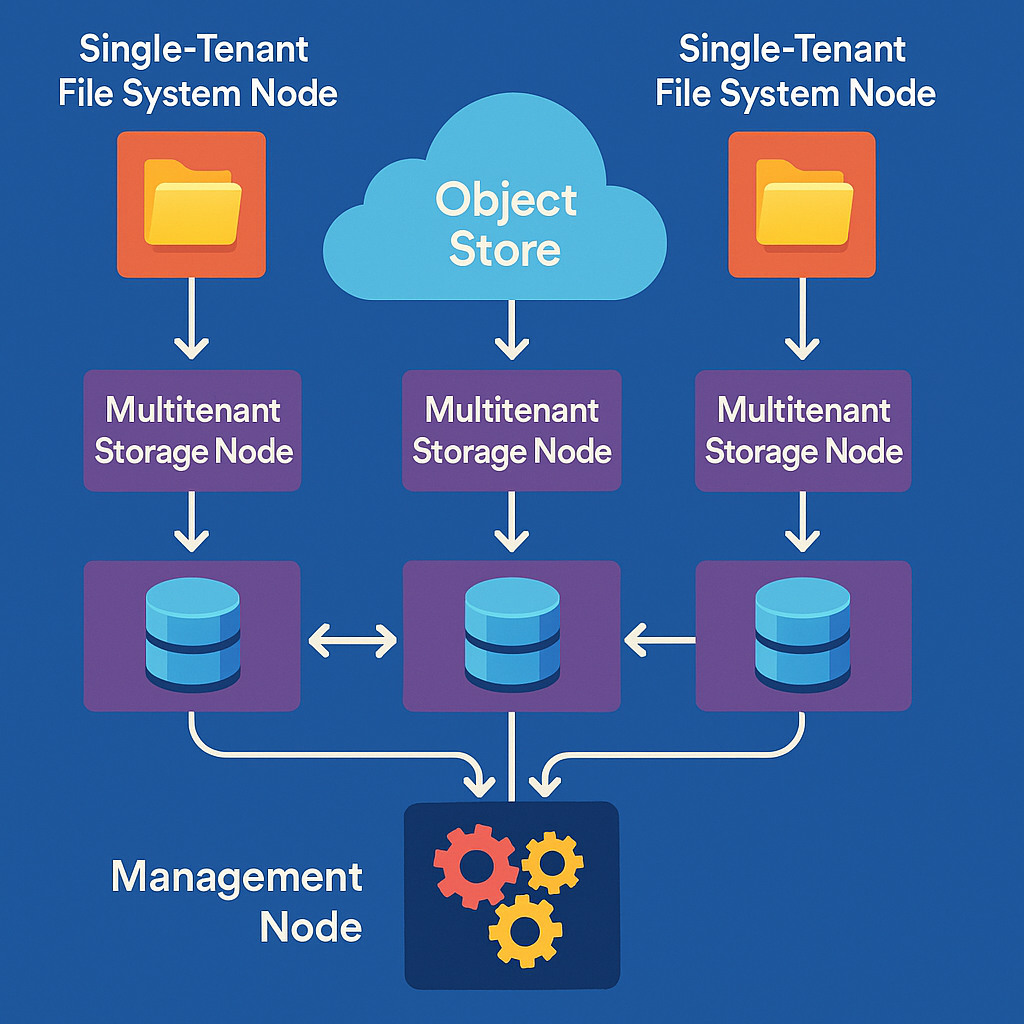
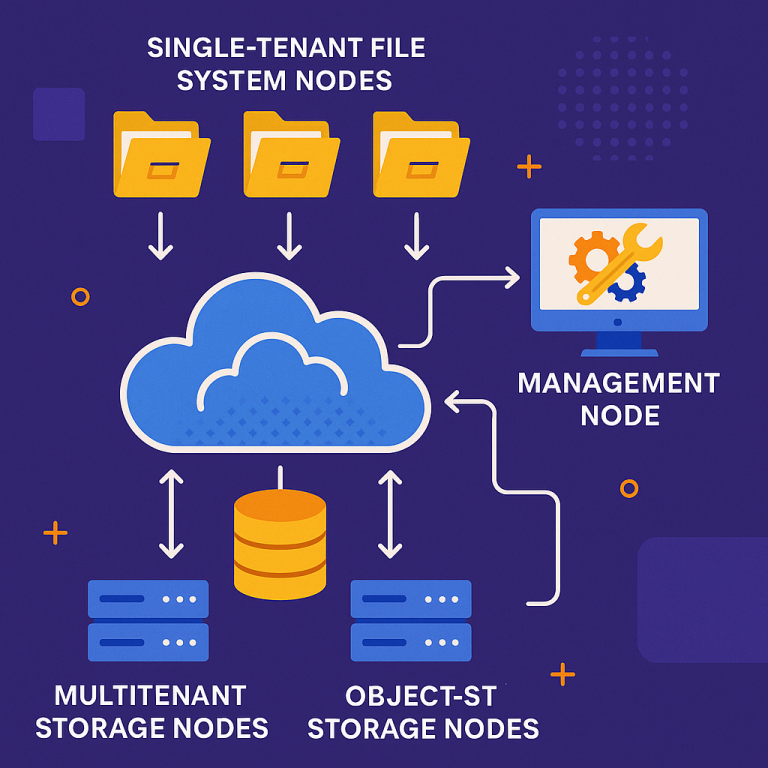
The system uses two types of nodes, or “workers”: single-tenant file system nodes, and multi-tenant storage nodes. The single-tenant nodes are like personal assistants for each customer—they handle that customer’s files, talk to their apps, and make sure everything is safe and private. The multi-tenant nodes are like a shared warehouse—they store the actual data for many different customers, but keep everyone’s stuff separate.
When you, as a customer, want to save or read a file, your request goes to your own file system node. This node talks to the multi-tenant storage nodes, which hold your data in their local storage (like fast SSDs), but also—and most importantly—keep a copy in a bigger, slower object store (like Amazon S3). This means your files are safe and can be restored even if something goes wrong.
Now comes the smart part: caching. Not all files are needed all the time. Some are used every day, others only once in a while. The storage nodes keep a cache of the most-used files in their fast local storage. But instead of using simple rules, this system watches how you use your files. It learns which files you (or your apps) read often, and which ones sit untouched. The system can then change its caching policy—its rules—on the fly.
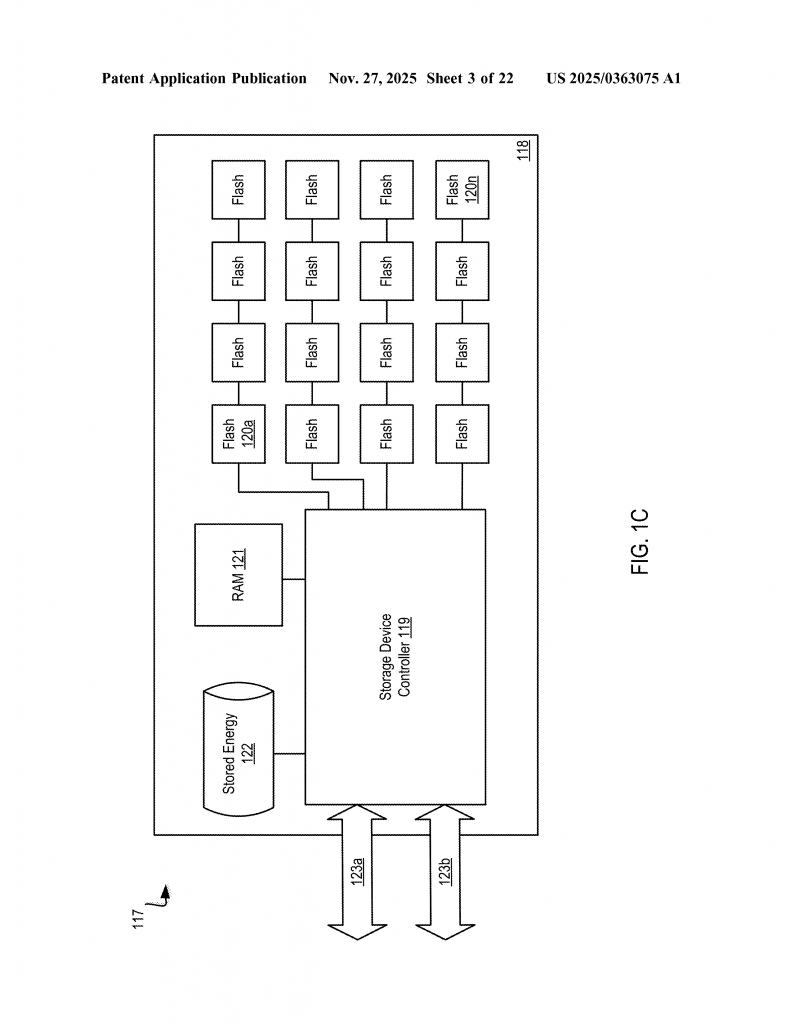
If you start using a new set of files more often, the system notices and keeps those files in the fast cache. If a file is not used much, it might be pushed out of the cache to make room for more popular files. If the system sees that the cache is not helping enough (maybe the hit rate—the number of times a request can be served from the cache—falls below a certain number), it can make the cache bigger or keep files longer. All this happens without you having to do anything.
Another clever feature is how the system scales. If your company suddenly needs more storage or faster performance, the management nodes—the brains of the operation—can add more file system nodes just for you, or move you to more powerful nodes. If you need less, it can shrink your resources, saving money. This upscaling and downscaling happens smoothly, so your apps never notice a hiccup.
The system is also careful with privacy. Even though storage nodes may hold data for many users, your files are encrypted with your own keys before being stored. This means that even if someone else’s data is on the same disk, only you (and those you allow) can read your files.
Another big plus is durability. The system always stores a copy of your data in the main object store (like S3), which is designed to never lose data. If a storage node fails or is lost, your data can be quickly rebuilt from the object store. The system can even spin up many new storage nodes in parallel to bring everything back fast after a disaster.
You can also pick your service level. If you want all your data to be super-fast all the time, you can ask for a bigger cache or longer retention in the fast storage. If you want to save money, you can ask for a smaller cache, knowing that older files may take a bit longer to open.
Finally, the system works with common file-sharing protocols like NFS and SMB, so your apps don’t need to change. It can also hook into cloud directory services, making it easy to manage users and permissions.
To sum up, the key innovations are:
- Combining single-tenant file system nodes with multi-tenant storage nodes for privacy and efficiency.
- Automatically changing caching policies in real time based on how each customer uses their files.
- Scaling resources up or down for each customer without downtime.
- Blending file system access with object storage for both speed and durability.
- Strong encryption and tenant separation for security.
- Support for standard protocols and easy management features.
These features work together to make cloud storage smarter, faster, safer, and more flexible than older systems.
Conclusion
Cloud storage is a big part of daily life and business. But not all cloud storage is created equal. This patent application takes a big step forward, blending the speed and familiarity of old-style file systems with the power, durability, and flexibility of new object storage. It learns how you use your files and adapts on its own, keeping things running fast and smooth for everyone. It also keeps your files private and safe, even when sharing hardware with others.
For businesses, this means lower costs, less worry, and happier users. For cloud providers, it means they can offer better services to more customers, without constant manual work. For everyone, it means the cloud just got a little smarter.
As cloud storage keeps growing, inventions like this will be key to making sure our files are always close, always safe, and always fast when we need them.
If you want to stay ahead in the world of cloud, keep watching for new ideas like this—because the way we store data is changing faster than ever.
Click here https://ppubs.uspto.gov/pubwebapp/ and search 20250363075.